Heralds of the plague
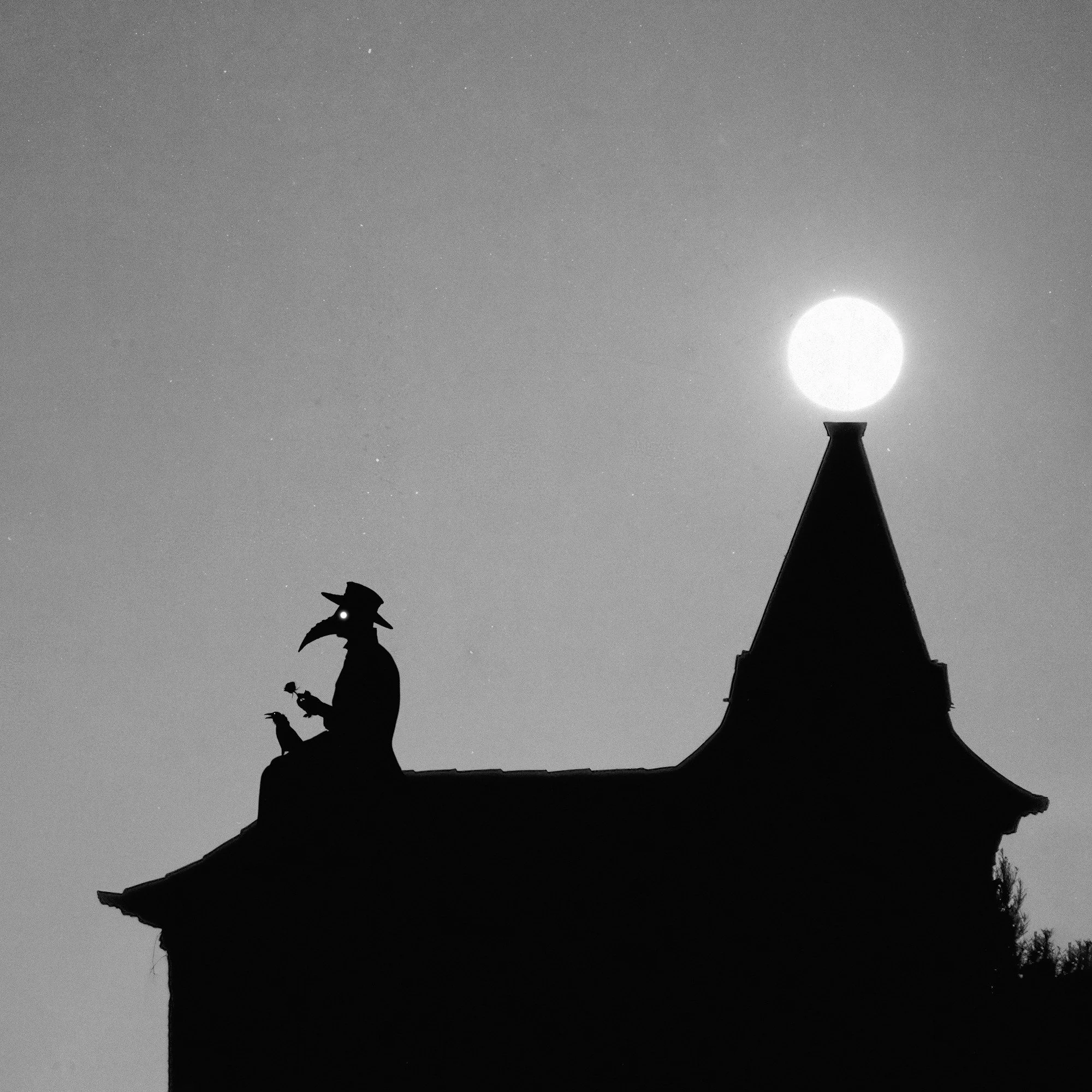
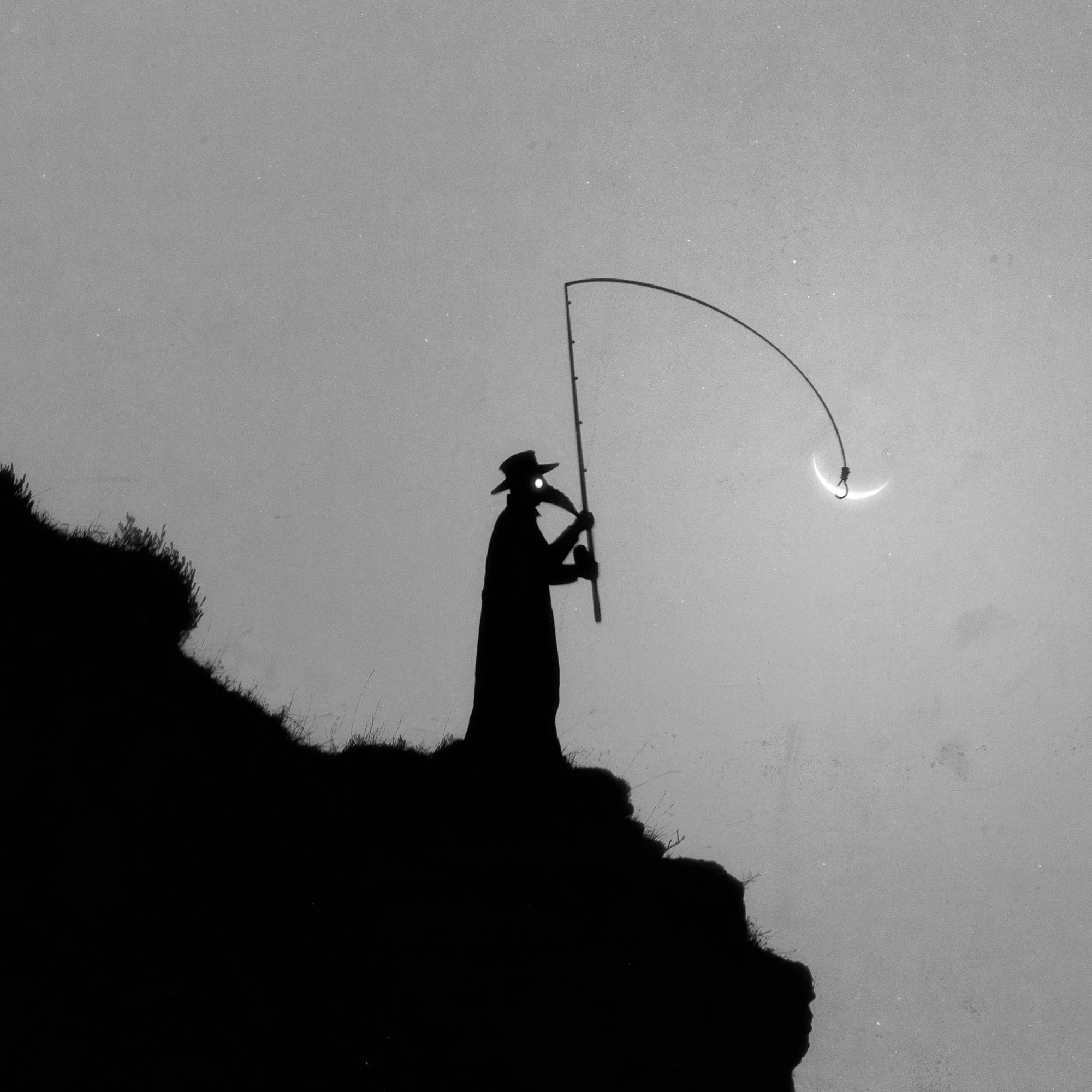
Lucas Garcete's series Heralds of the Plague is deeply embedded in the context of his visual work, which explores the mystery of death and transcendence through complex photographic manipulation. In this series of collages, the heralds, those messengers of death, are presented in a nocturnal setting—sometimes urban, sometimes rural—that intertwines with the principles of life and death. This symbolic duality reflects the constant tension that runs through the series, guiding us on a journey toward cosmic understanding and the inevitable end.
The heralds decipher the principles that govern existence, stirring bitter concoctions like hemlock, while their pointed masks conceal medicinal herbs that mask the stench of corpses. They ride through unfathomable nights in search of luminous acherontias, trampling on the charred skeletons of kings and beggars. They embroider cemeteries with black lace like death itself, which they then scatter in the form of terrible butterflies. They dig graves, perform autopsies on beetles under the moonlight, and smell like the deceased: the deceased that we are, the corpse that we are becoming. As they ride their steeds of ash, they stumble upon us and ask, "What is your name?" They lead us into the dark clarity and abandon us on the edge of the world, where we will leaf through eternity plagued with stars.
Heralds of the Plague is not just a series of photographic collages, but a profound exploration of death, achieved through the manipulation and superimposition of images that resonate with the techniques Garcete has perfected throughout his work. The use of black and white, chiaroscuro, and the careful composition of silhouettes—sometimes cut out against skies torn by lightning, full moons, or desolate landscapes—reinforce the somber tone of the series, creating an atmosphere that is not only observed but felt, evoking a journey into the unknown. Garcete does not seek to humanize death, but rather to confront it in its most absolute mystery.